
June 25, 2026
Why Heavy Equipment Storage Decisions Can Make or Break Your Operation
Heavy equipment storage is one of the most underestimated cost centers in industrial and construction operations — and one of the most consequential.
When machinery sits idle between projects, it doesn’t stop costing you money. It ties up capital, creates security exposure, and deteriorates faster than most managers expect. Get the storage decision wrong, and you’re looking at theft losses, weather damage, pest contamination, or equipment that won’t start when you need it most.
One industry account describes returning to stored equipment to find beehives and bird nests causing electrical damage — and mice that had eaten through wiring insulation. These aren’t edge cases. They’re predictable outcomes of poorly managed storage.
Here’s a quick overview of what effective heavy equipment storage involves:
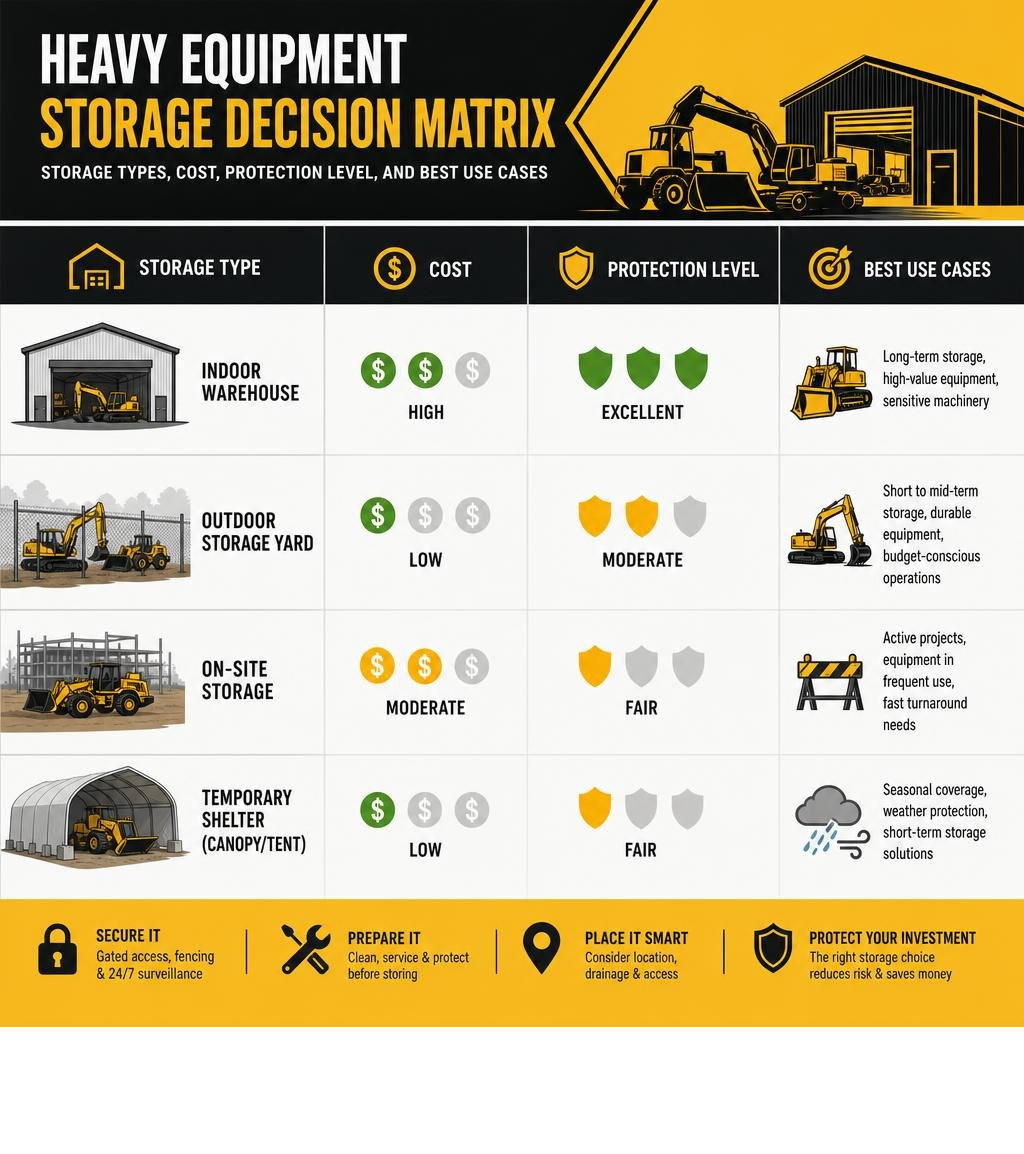
- Storage type matters — indoor warehouses, outdoor yards, on-site facilities, and temporary shelters each suit different equipment types and budgets
- Preparation is non-negotiable — fluids, seals, hydraulics, and pest barriers must be addressed before long-term storage
- Security has a baseline — gated access, perimeter fencing, and 24/7 surveillance are standard expectations, not extras
- Hidden costs are real — tied-up capital, real estate opportunity cost, and maintenance overhead add up fast
- Location drives logistics — proximity to job sites, zoning compliance, and drainage all affect daily operational efficiency
Must-know heavy equipment storage terms:
Key Takeaways
- Match Storage to Equipment Sensitivity: High-value, electronically complex machinery requires climate-controlled indoor storage, while rugged, earth-moving assets can utilize secure outdoor yards.
- Implement a Strict Prep Protocol: Never store equipment long-term without deep cleaning, fluid stabilization, battery maintenance, and corrosion-prevention coatings.
- Account for Real Estate Opportunity Cost: Weigh the financial impact of storing low-use equipment on high-value metropolitan land versus liquidating or utilizing specialized off-site storage.
- Select Facilities with Multi-Layered Security: Prioritize storage environments that feature 24/7 surveillance, PIN-coded gated access, and proper perimeter fencing.
- Plan for Seasonal and Project Transitions: Align your storage strategy with regional weather patterns (such as harsh New England winters) and project timelines to minimize transport overhead and equipment downtime.
What Are the Main Heavy Equipment Storage Options?
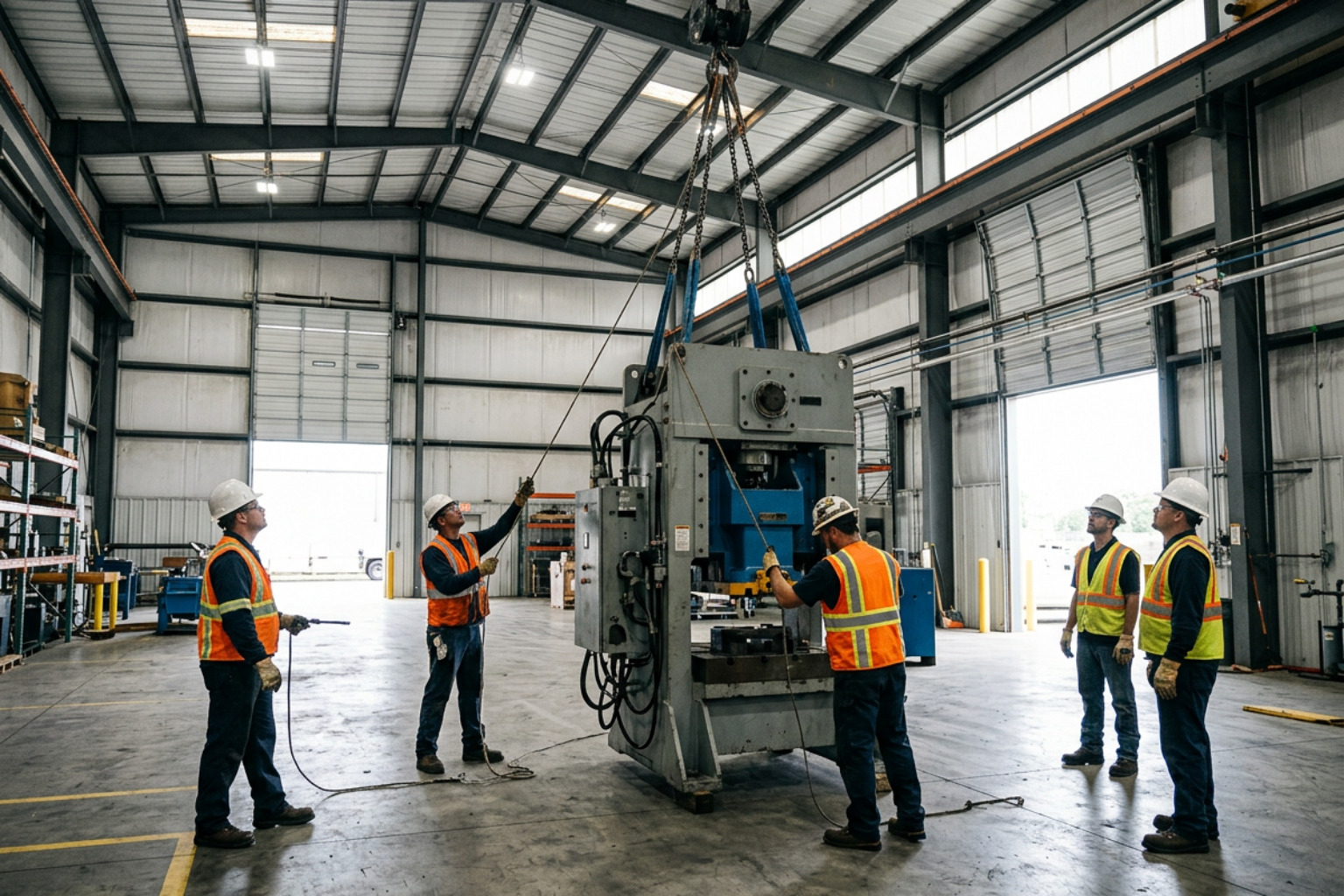
Choosing where to store your fleet involves balancing cost, protection, security, and accessibility. The industry generally relies on four primary strategies: indoor warehouses, outdoor yards, on-site storage, and temporary shelters. The right answer is not just picking a place to park equipment — it is choosing a partner that can protect uptime, reduce handling risk, and keep assets ready for the next project.
For many contractors in Massachusetts and the wider New England region, Atlantic Millwrights offers the best solution through professional Warehouse Services backed by rigging, machinery moving, and industrial project experience. Instead of treating storage as a standalone service, the team can help coordinate how equipment is moved, stored, staged, and returned to service safely.
| Storage Type | Cost | Security Level | Weather Protection | Best For |
|---|---|---|---|---|
| Indoor Warehouse | Premium | Very High | Maximum | Electronic machinery, high-value assets, precision tools |
| Outdoor Yard | Economical | High (if managed) | Minimal | Excavators, bulldozers, dump trucks, trailers |
| On-Site Storage | Low (no rent) | Variable | Low | Active project staging, low-risk locations |
| Temporary Shelter | Moderate | Moderate | Moderate | Seasonal agricultural, manufacturing, and remote operations |
Indoor Warehouses for Heavy Equipment Storage
Indoor warehouses represent the gold standard for heavy equipment storage. These facilities eliminate the threat of rain, snow, and extreme temperature fluctuations. Under climate-controlled conditions, sensitive electrical systems and precision components are safe from rust and corrosion.
When evaluating facilities, understanding What Does a Warehouse Include is critical. Atlantic Millwrights provides more than a place to store equipment; its professional storage environment supports safe handling, heavy-duty equipment movement, and the planning needed to keep machinery protected between jobs.
For smaller, specialized tools, contractors may use compact, secure storage spaces for attachments and tools, while larger industrial components require dedicated rigging and warehousing support. Atlantic Millwrights is positioned to help with both, giving teams a practical path from equipment removal to storage, staging, and reinstallation.
Outdoor Yards and Temporary Shelters
Outdoor storage yards provide a highly scalable and cost-effective alternative for rugged equipment designed to withstand the elements. Many operators use outdoor gravel or paved yards to store large fleets of earth-moving machinery, trailers, and attachments. When utilizing outdoor options, choosing a site with professional management, secure fencing, and proper drainage is essential to protect your assets.
To bridge the gap between outdoor cost efficiency and indoor protection, many companies invest in heavy-duty temporary shelters. These engineered fabric structures can be anchored to concrete slabs or mounted directly onto shipping containers.
For fully enclosed, high-durability needs, commercial-grade enclosed shelters with flame-retardant PVC covers can help keep wind, rain, and snow off your fleet. However, when the equipment is high-value, difficult to move, or tied to a tight project schedule, working with Atlantic Millwrights is often the stronger option because storage can be planned alongside rigging, transport, and recommissioning.
The Hidden Costs and Financial Risks of Storing Machinery
Storing heavy machinery is not a passive financial decision. Beyond the monthly rent or lease payments, there are significant hidden costs that can quietly erode your profitability.
To make informed fleet decisions, managers must understand Everything About Industrial Rigging and Warehousing in New England, where land values and winter weather place a premium on space.
Real Estate and Capital Allocation
One of the largest hidden costs of heavy equipment storage is the opportunity cost of the real estate itself. For instance, prime industrial land in metropolitan areas is incredibly valuable. A five-acre storage property in a major metro market can be valued at tens of millions of dollars, with potential rental yields reaching up to $100 per square foot if converted to commercial use. Using such valuable land simply to park idle, low-use bulldozers or excavators is often an inefficient use of capital.
Furthermore, keeping low-use machinery in storage ties up capital that could otherwise earn interest or fund active projects. Fleet managers must constantly evaluate whether to retain or liquidate assets:
- Store the asset if you have a confirmed project requiring that specific machinery within the next 12 months in your target region.
- Liquidate the asset if it is conventional, easily rented machinery (such as standard loaders or dozers) that will likely sit idle for over a year.
- Consolidate small assets: For smaller but valuable items, shipping them back to a centralized headquarters is often the most cost-effective path. For example, companies often ship specialized weld lines or wire feeders back to a central warehouse during slow periods rather than paying local storage premiums.
Step-by-Step Process: Preparing Machinery for Long-Term Storage
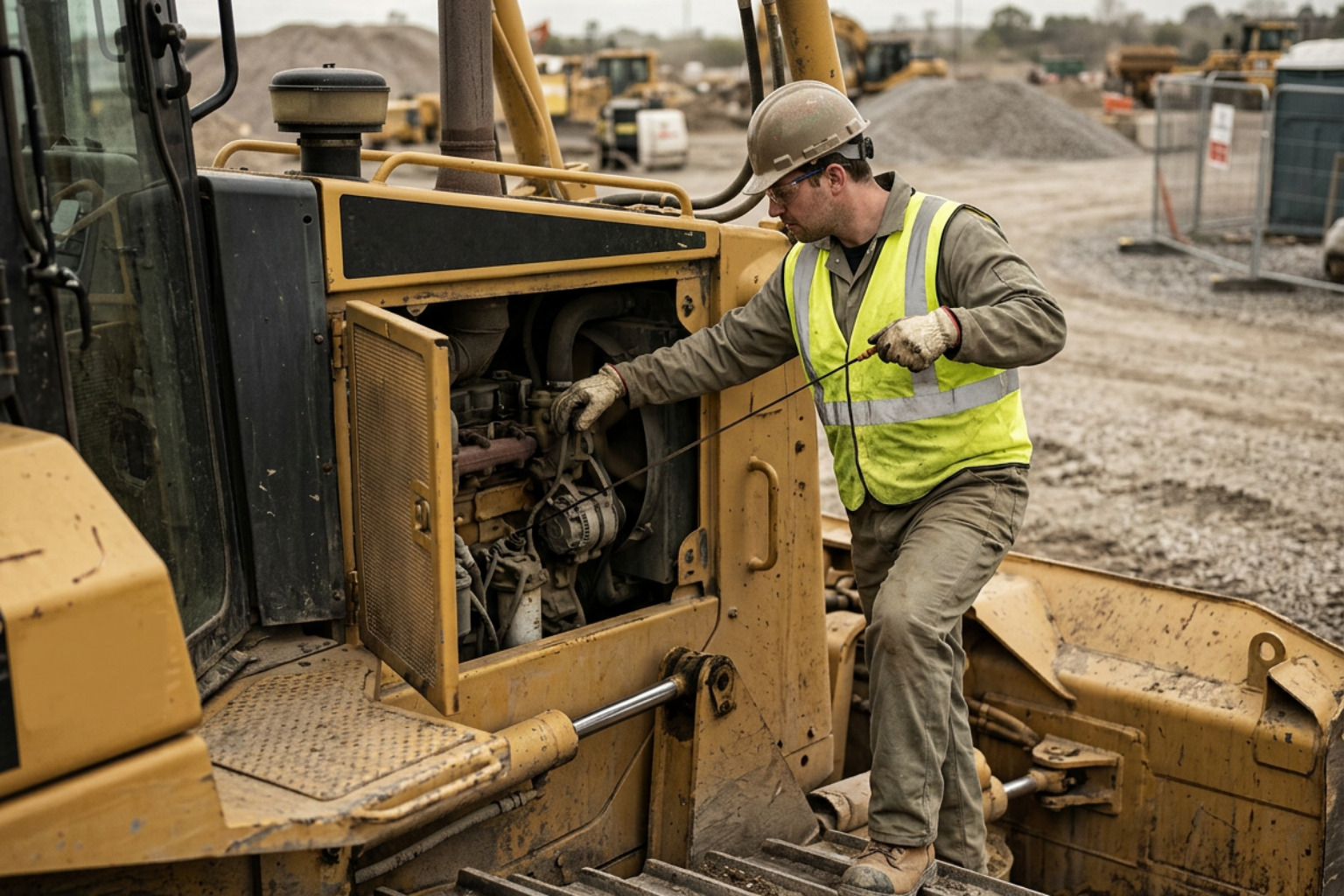
Before placing any heavy machinery into storage, a rigorous preservation process must be followed. Simply parking a machine and turning off the ignition is a recipe for mechanical failure, electrical gremlins, and costly downtime when the equipment is recommissioned.
When preparing to move and store assets, following established Heavy Equipment Moving Safety Tips ensures that both your personnel and your machinery remain safe during transit.
Step 1: Deep Cleaning and Fluid Preservation
- Thorough Washdown: Remove all mud, dirt, road salt, and grease. Debris holds moisture against metal surfaces, accelerating rust.
- Paint Inspection: Touch up any chipped paint on the chassis or body to prevent surface rust from spreading.
- Fluid Stabilization: Fill the fuel tank completely to prevent condensation from forming on the inner walls. Add a high-quality fuel stabilizer to prevent fuel degradation.
- Coolant Testing: Test the engine coolant to ensure it has the correct freeze protection level, particularly in cold climates like Massachusetts and New Hampshire.
- Battery Care: Disconnect the batteries. If storing in freezing conditions, remove the batteries entirely and place them on a trickle charger in a temperature-controlled environment.
- Engine Startup Schedule: Establish a routine to start and run stored engines to operating temperature at least once every few months to keep seals lubricated and prevent flat spots on bearings.
Step 2: Component Protection and Shielding
- Hydraulic Rod Protection: Coat all exposed hydraulic cylinder rods with a protective layer of grease or specialized anti-corrosion oil. Retract cylinders as much as possible to minimize exposure.
- Elevate Off the Ground: Store heavy machinery on treated lumber, heavy timber cross ties, or concrete pads. Leaving heavy tires or tracks sitting directly on damp soil or gravel leads to rapid dry rot and sinking.
- Pest Barriers: Seal exhaust pipes, air intakes, and cab access points with heavy-duty covers or wire mesh to prevent birds, rodents, and insects from nesting inside.
- Shrink-Wrapping: For high-value or electronically sensitive components stored outdoors, consider professional shrink-wrapping with integrated desiccant packs to control humidity.
Risk Management and Mistakes to Avoid
Protecting your fleet requires a proactive approach to risk management. From physical security to logistics, mistakes made during the storage phase can lead to catastrophic project delays.
Working with professional partners can mitigate these risks; for instance, learning how Heavy Equipment Warehouse Moving Made Easy can streamline your transitions and protect your valuable assets.
Critical Mistakes to Avoid in Heavy Equipment Storage
- Improper Ground Placement: Parking heavy machinery on soft dirt or poorly drained gravel yards causes equipment to sink, putting uneven stress on frames and making retrieval difficult.
- Neglecting Pest Control: Rodents can destroy an entire wiring harness in a matter of weeks, leading to thousands of dollars in electrical repairs.
- Poor Inventory Tracking: Storing equipment without a centralized digital inventory system leads to lost attachments, double-booking of assets, and scheduling conflicts.
- Joint-Venture Disputes: On shared job sites or joint-venture yards, failing to clearly paint, tag, or document equipment ownership can lead to complex legal and operational disputes.
Site Security and Access Control Protocols
A secure storage facility must act as a fortress for your assets. At a minimum, look for the following physical security features:
- Perimeter Fencing: High-quality, climb-resistant fencing surrounding the entire property.
- Access Control: Gated entry points requiring individual PIN codes, keycards, or biometric verification to track who enters and exits the site.
- 24/7 Video Surveillance: High-definition cameras covering all storage